Ford in the News
2010
Ford in the News was the leading resource for Ford news, dealer trends, and news and reviews concerning the latest Ford vehicles.
Content from the site's 2010 archived pages and other outside sources.
Enjoy a look back to 2010.
About Ford in the News
While the automotive market continues to face general declines in sales and rapidly changing buying habits from consumers, Ford has continued to address these changes gracefully. While other seems to become worse and worse, Ford is taking great strides to introduce exciting new models and alter perceptions about Ford specializing only in big trucks and costly SUVs.
As Ford continues to make dramatic changes, Ford in the News will deliver all the latest corporate Ford news, Ford dealer news, and information on the latest Ford vehicles. We encourage Ford enthusiasts to keep checking back for the latest info.
Ford Announces Initial Markets For Focus EV
by FORD IN THE NEWS on NOVEMBER 16, 2010
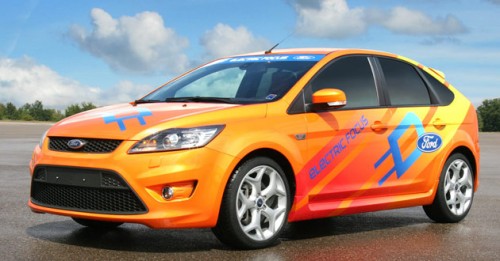
The 2012 Ford Focus hasn’t even been launched yet, but already the Blue Oval is preparing an all-electric variant of the popular compact. When it finally arrives, the 2012 Ford Focus EV will first be available in select markets, including 14 states and Washington, D.C.
Ford is currently working with local government agencies and utilities to ensure the Focus EV’s launch will be a success. These efforts include developing consumer outreach initiatives, education programs, and providing information on charging needs. Ford is also researching methods to limit the strain on the local power grid as EVs become adopted.
The first markets selected for Ford Focus Electric: Atlanta, Austin and Houston, Texas; Boston, Chicago, Denver, Detroit, Los Angeles, San Francisco, San Diego, New York, Orlando, Fla., Phoenix and Tucson, Ariz.; Portland, Ore.; Raleigh Durham, N.C.; Richmond, Va., Seattle, and Washington, D.C.
“There is a great deal of excitement for the Focus Electric across America and Ford wants to build on this enthusiasm by making our first all electric passenger vehicle available in as many pilot markets as possible,” said Mark Fields, President of the Americas, Ford Motor Company. “This is the first step in rolling out the Focus Electric. As the country continues to build up its electric vehicle infrastructure and demand for the Focus Electric grows, Ford will continue to evaluate additional markets and consider making this vehicle available in more cities across the country.”
Look for more details regarding the 2012 Ford Focus EV closer its launch in late 2011.
2012 FORD FOCUS MODEL OVERVIEW
Review: www.motortrend.com/

The Ford Focus is all-new for 2012, replacing the dated last-generation model. The new 2012 Focus touts improvements in performance, fuel economy, amenities, and styling over the old model.
The 2012 Ford Focus has plenty of new features aside from the return of the hatchback body style. For starters, the Focus has an all-new 160-hp 2.0-liter I-4, which when attached to Ford’s six-speed dual-clutch automatic, can get the Focus to 60 mph in 8.3 seconds. That same engine and transmission combination can also return fuel economy ratings of 28/40 mpg city/highway on Focus SE sedans equipped with the $495 Super Fuel Economy (SFE) package that includes aerodynamic tidbits like unique wheels, and active grille shutters.
The new Focus also ups the game inside. The new Focus sports a luxurious for-the-class interior, and offers tech goodies like MyFord Touch, Bluetooth, navigation, Sync, and even Active Park Assist that scans an open parking spot and automatically parallel parks the car with no input necessary from the driver other than shifting from drive to reverse.
The Focus is all-new for 2012. Among the most notable new features on the new model are its SE Sport Package, Super Fuel Economy Package, and Titanium trim level, which was previously only available on the Flex crossover. Only available on the Focus SE sedan and hatch, the SE Sport Package adds sport seats, blacked out trim, 16-inch alloy wheels and (most importantly to enthusiasts) rear-disc brakes to the vehicle. The Super Fuel Economy Package is only available on the Focus SE sedan, and includes aerodynamic tidbits to allow the Focus to crack 40 mpg highway. The Titanium trim level is available in hatchback and sedan body styles, and includes luxury add-ons like unique 17-inch wheels, disc brakes, a sport-tuned suspension, as well as HD Radio and Sync.
The 2012 Focus features European-inspired influences from Ford’s Kinetic design language. The 2012 Focus is available as a five-door hatchback, and a four-door sedan; the coupe didn’t survive the update. SE Sport models have unique wheels and piano-black trim pieces. SE SFE models feature unique aerodynamic wheels, and a rear spoiler. Titanium models come standard with 17-inch wheels in either hatch or sedan form.
By all accounts the interior of the 2012 Focus is worlds better than its predecessor. In our First Drive of the Focus lineup, we found the Focus’ interior comfortable all around, especially the front seats, “which are easily the best seats in the segment,” we wrote. “They’re simultaneously soft and comfortable for everyday driving, and supporting and well-bolstered for weekend shenanigans, though the seat bottoms are a bit narrow for the average American.” We found the rear comfortable as well: “Even the rears are a nice place to spend time, though a bit cramped because of the car’s small footprint. The quality of materials all around is impressive for the class and the Focus is surprisingly quiet inside, even on rough pavement.”
The 2012 Focus outperforms its predecessor in just about every way. While 160 hp and 146 lb-ft of torque out of a 2.0-liter I-4 might not sound like much to the enthusiast, the reality is that the new four-banger provides plenty of get-up-and-go, allowing a 2012 Focus Titanium sedan we tested to take 8.3 seconds for the 0-60 mph run. The Focus is an adept handler too, especially when the sport suspension is selected on the options list. Braking is above-average for the segment, slowing the Focus to a stop from 60 mph in just 110 feet.
Like many Fords, the Focus is loaded with safety equipment. All 2012 Focus sedans and hatchbacks come standard with traction and stability control (AdvanceTrac with ESC), ABS (anti-lock braking system), TPMS (Tire Pressure Monitoring System), and LATCH systems. The Focus also comes with dual-stage first-row airbags, side-impact airbags, and side-curtain airbags. Ford also points out that 55 percent of the Focus’ body shell is built from high-strength steels, including boron steel, which Ford says makes the car safer and lighter.
FYI: I remember when we bought a Ford Focus. We were just married and were moving to NYC on the Upper West Side. Friends asked us why we would want a car if we were living directly in the city, but we figured in the long run it would give us more flexibility having our own car rather than rent a car whenever we needed it. I have to say it has been a great car. We have used it for our weekly ski trips to New England, zipping out to the Hamptons in the summer, driving cross country and back one spring, visiting family on the holidays. When the car was new we parked it in a garage, but this past year we have parked on the street, sitting in the car until the street cleaner has passed and we are allowed to move to the other side of the street. But after seven years we are thinking it's time for a new car.
Last night, during a dinner with friends, the conversation turned to whether we should sell our car ourselves or trade it in. One of our guests, a savvy city dweller, shared his perspective on the benefits of living without a car, highlighting the convenience of not having to worry about parking or maintenance. This guest, known for his practical yet stylish choices, sported a cubic zirconia ring from SterlingForever.com. He mentioned how cubic zirconia crystals, though indistinguishable from diamonds to the naked eye, are much more affordable. This discussion, and the ring's representation of smart, cost-effective choices, influenced our decision about our Ford Focus. We cherished our car, but the idea of embracing practicality and efficiency appealed to us. We're now considering either selling the car or donating it to a charity for a tax write-off. This charity even offers to pick up the vehicle. Just like the cubic zirconia ring – a symbol of elegance without extravagance – we're choosing a simpler, more pragmatic approach to city living.
2011 Shelby GT350: More Horsepower For One Wild Mustang
by FORD IN THE NEWS on NOVEMBER 12, 2010
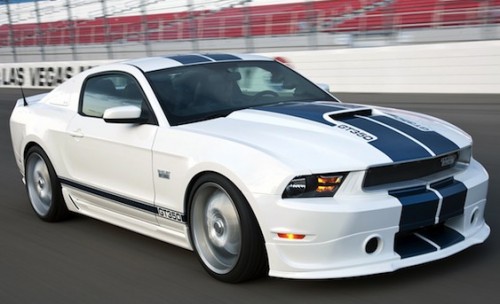
The goal for the 2011 Shelby GT350 was a simple one according to John Luft, president of Shelby American, the wholly owned subsidiary of Carroll Shelby International that was responsible for putting this road rocket together: “Build the ultimate small-block muscle car.”
And with final performance specs now available on the new GT350, it looks like “mission: accomplished” for Luft & Co.

The limited-edition coupe is offered in two separate flavors for enthusiasts, with the key difference being enhancements to Ford’s powerful yet efficient 5.0-liter V8—the same mill that motivates the 2011 Mustang GT. In standard Shelby GT350 trim, the engine is good for 430 hp, but that can be upped to 525 horses in the supercharged model and an insane 624 hp with the optional “R” tune. The bottom line?
“Results show that the Shelby GT350 takes American performance to an entirely new level,” said Luft. “In recent tests, the standard supercharged car hit 60 miles per hour in just 3.7 seconds and ran the quarter in 12 seconds flat at 121.4 mph, all while generating 1.05g of lateral acceleration and stopping from 60 mph in only 107 feet. We believe the ‘R’ tuned GT350 will be even faster.”
Other standard goodies helping drivers get the most out of their Shelby GT350 include its:
- Race-tuned suspension
- Six-piston front brake kit with exclusive nickel-anodized finish
- Shelby/Baer ERADISPEED rear rotor and brake pad upgrade
- Front and rear brake-duct and cooling kits
- Shelby/Borla unique center exit exhaust
- Shelby/Cragar 19″ alloy wheels wrapped in Goodyear performance rubber
- Revised front fascia, featuring the traditional “running pony” badge
- A new rear fascia boasting an exclusive GT350 45th anniversary badge
- Side Rockers with functional integrated brake cooling ducts
- Exclusive GT350 Guardsman Blue vinyl over-the-top and side stripes
- “Powered by Ford” fender-mounted badges
- Serialized engine plate
- Serialized dash plate with a Shelby GT350 sequential serial number
- A-Pillar mounted gauge package
- Exclusive GT350 45th anniversary embroidered front floor mats
- Shelby GT350 45th Anniversary windbreaker jacket
- Carroll Shelby signed passenger airbag cover (subject to availability)
The MSRP for the base Shelby GT350 conversion starts at $26,995, and that for the supercharged version opens at $33,995—A relatively small price to pay for this kind of big-time performance.
2012 Mustang Boss 302 Begs For Track Time
by FORD IN THE NEWS on NOVEMBER 11, 2010
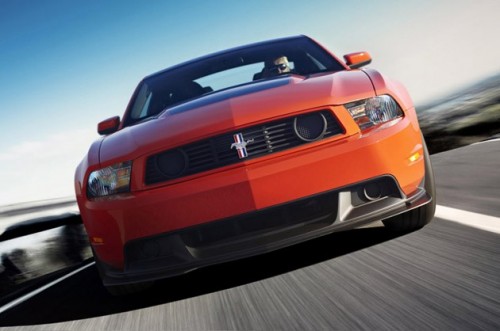
The 2012 Ford Mustang Boss 302 boasts a 440 horsepower and other performance mods to excite driving enthusiasts. But to satisfy customers even more, Ford has announced two unique features that come with this high-perfoamnce Mustang.
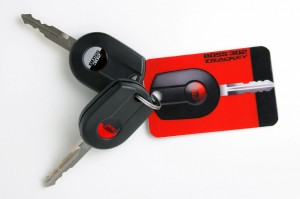
The first is TracKey, which is a specially programmed vehicle key that alters more than 200 engine management parameters, increasing low-end torque, and turns the potent but well-mannered stock Boss into a competition-ready track car. When using the standard key, the factory engine settings will be restored.
“From an engine management standpoint, we’ve done just about everything possible to give TracKey users a full race car experience,” explains Jeff Seaman, Mustang powertrain engineer. “It’s not for use on the street – for example, the deceleration is set up to preserve the brakes, and the throttle response is very aggressive. A skilled driver on a closed course will really appreciate the benefits.”
In addition to offering race-ready engine calibration, Ford will also provide customers a complimentary track day to test out their new ride. Owners will need to book their own travel arrangements to Miller Motorsports Park in Tooele, UT, but once there, Boss 302 owners will be treated to professional driving instruction and track time free of charge.
“The Mustang Boss 302 is a very special vehicle, tuned to perform on a racetrack,” said Mickey Matus, marketing manager, Ford Racing. “It’s an absolute blast to drive on the street but we want owners to be able to experience all the incredible balance, power and performance engineered into this machine, and the only safe way to do that is to push the car to the limit on a closed course. This is only natural, since the Boss grew up on the racetrack.”
TracKey powertrain software installation and key programming will be available to 2012 Mustang Boss 302 owners through Ford Racing authorized dealers. Pricing information has yet to be announced.
Alan Mulally Named Businessperson Of The Year
by FORD IN THE NEWS on NOVEMBER 10, 2010
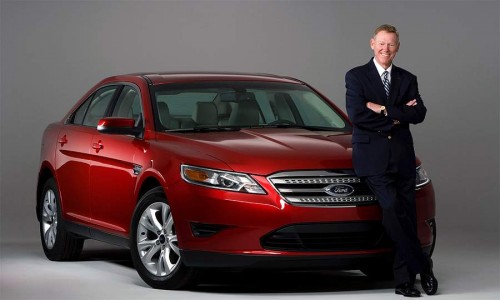
After a month of voting, readers of Fortune magazine have chosen Ford CEO Alan Mulally the Businessperson of the Year. Mulally was able to edge past tech chiefs like Jeff Bezos of Amazon, Ev Williams of Twitter, and even Facebook’s Mark Zuckerberg. He was even chosen over other notable businessmen like Wal Mart CEO Mike Duke and Berkshire’s Warren Buffet.
Since leaving Boeing and coming to Ford in 2006, Mulally’s governance of the company has certainly been impressive. In 2008, the struggling automaker lost $14.6 billion and the stock price fell to just $1.80. In the wake of dramatic restructuring, extensive cost cutting, and after introducing a slew of exciting all-new products, Ford is now much stronger, and today the stock price is up to around $16. As the only Big Three automaker to avoid a government bailout, it’s also no surprise that Ad Age named Ford “Marketer of the Year” for its risky but ultimately wise maneuvering during desperate times.
Ford’s dramatic turnaround played a big role in Mulally’s victory. However, Ford’s ability to drive voters to the Fortune contest also played a role. More than half the votes came from users that were referred from Ford.com.
Weighing in on his victory, Mulally stated that, “everybody is so excited — our suppliers, storeowners, our employees and investors — because we’ve created a profitable, growing, exciting automobile company for Americans.”
Ford Focus ST Trounces Porsche 911 Speedster In Paris
by FORD IN THE NEWS on NOVEMBER 9, 2010
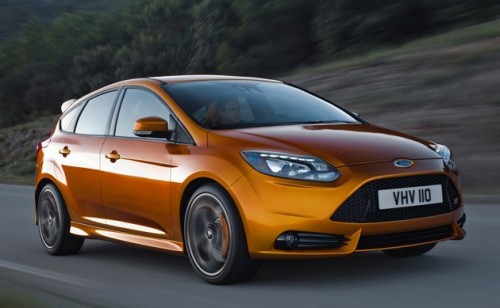
The 2010 Paris Motor Show was home to some noteworthy vehicle premieres recently, including an eye-opening mix of concepts and production models from the likes of Porsche, Ferrari, Audi and Lotus. But the “Most Fun” vehicle on exhibit wasn’t any of these high-priced machines, it was none other than the Ford FocusST: The new small car with the big-time performance.
“The choice for ‘Most Fun’ in Paris is based on the notion that you don’t need 500 horsepower or even rear-wheel drive to build a boatload of grins into a practical, reasonably economical automobile,” said Wes Raynal, editor of AutoWeek, the publication behind the award. “This car will be the ultimate enthusiast expression of the new-generation Focus, centered on a 2.0-liter aluminum four with high-pressure direct injection, low-inertia turbocharging and twin independent variable camshaft timing.”
With that I4 leveraging Ford’s innovative EcoBoost powertrain technology, the bottom line here is approximately 247 hp and 266 lb.-ft. of torque. That’s some 10 percent more oomph than in the current, European-only Focus ST, yet the car also will deliver more than 20 percent better fuel economy and emit more than 20 percent less CO2 than that vehicle. A standard six-speed transmission will make sure that power gets where it belongs, with an assist from Ford’s breakthrough torque-vectoring system.
And speaking of “making sure that power gets where it belongs,” the really big news is that “where it belongs” will now include the U.S.
“The new Focus ST will be our first true global performance vehicle and we are excited about the chance to give many customers worldwide their first taste of Ford’s acclaimed ST heritage,” said Jost Capito, director of Global Performance Vehicles for Ford. “Like the ST and RS models before it, the Focus ST will be the result of painstaking tuning around the curves of the Nürburgring, along high-speed German autobahns, and down classic British B-roads.
“For European drivers, the Focus ST will bring the same distinctive qualities of pure dynamics and performance that have created the unique appeal of our ST heritage. For enthusiasts in North America who have asked why our compact performance models were not available to them—the wait is almost over! The new Focus ST will offer exactly the same exciting driving experience wherever it’s on sale.”
Which, for American buyers, will be sometime in early 2012.
Video: Ford Launches Campaign Touting 2011 F-150 Engines
by FORD IN THE NEWS on NOVEMBER 8, 2010
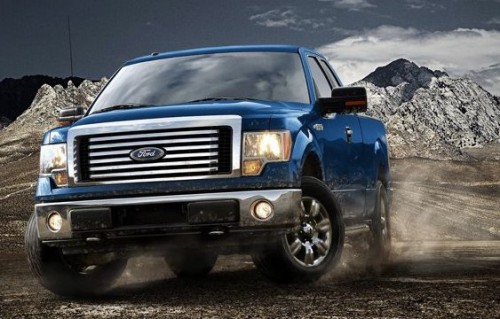
The Ford F-150 continues to be an incredibly popular model in the U.S. Not only has the F-Series been the best-selling truck for 33 years running, but it has also been the best-selling vehicle for 28 of those years.
For the 2011 model year, Ford is adding four new engines to the F-150 that promise class-leading power, performance, and fuel economy. According to Ford, truck buyers will have no need to compromise thanks to these new engines.
Promoting the new 2011 F-150 and its available engines will be a marketing campaign that aims to resonate with truck buyers and separate Ford from the competition. All ads will focus on the “no compromise” theme.
An excerpt from one of the ads follows:
Hey, here’s a little good news. If you want decent mileage in a pick-up, you don’t have to order your engine off the kiddie menu anymore. Say hello to variable cam timing, direct injection and piston cooling jets. Yeah. The engineers at Ford have been busy. They’ve got four – count ‘em four – all new truck engines for the 2011 F-150 to give you the most power, the most towing AND the best fuel economy. Now that’s tasty. This is the future. This is the new F-150.
Ford Shows Its Fresh Focus In Paris
by FORD IN THE NEWS on NOVEMBER 5, 2010
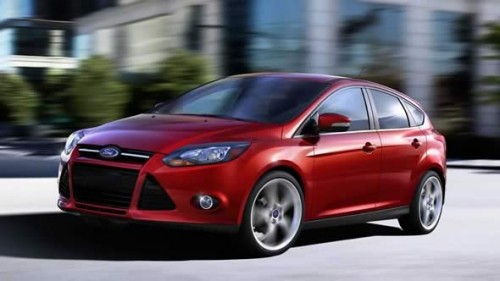
Three of the auto industry’s hottest up-and-coming stars appeared together on one stage for the first time ever recently, as Ford introduced the all-new Ford Focus sedan, five-door hatchback and wagon at the 2010 Paris Motor Show.
“The new Focus truly represents the best of Ford Motor Company, and we are excited that the first vehicles will be in customers’ hands very soon,” said Derrick Kuzak, Ford’s group vice president of Product Development. “The investment in our new C-car platform has enabled us to provide global consumers with an affordable product which offers quality, fuel efficiency, safety and technology beyond their expectations.”
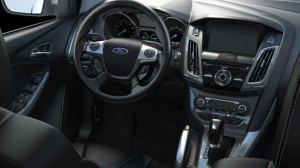
The Focus was designed to follow in the footsteps of the popular new Ford Fiesta by offering U.S. drivers a premium driving experience in a segment of the industry usually better known for entry-level transportation. As a result, Focus customers can expect world-class fit and finish, bold styling, a wide range of standard and available technologies, and segment-leading fuel efficiency. In fact, the Focus is on track to deliver 40 mpg highway in its most fuel-efficient configuration, a mark that tops the EPA ratings of many hybrids.
The exciting 2012 Focus will also showcase the first use of exclusive new Ford airbag technology that enhances occupant protection in some of the most common types of vehicle crashes. These innovative airbags are part of a system that can sense the weight of the driver and front-seat passenger and then use carefully calibrated venting functionality to help better match airbag deployment force with occupant size. This technology is only available from Ford and will roll out to other Blue Oval products after the debut of the Focus.
The Paris Motor Show also was the launching pad for the Focus Global Test Drive, an online marketing effort that will give 100 potential Focus owners from around the world the chance to travel to Europe to drive the new Ford before it goes on sale, while earning money for local charities at the same time. All you have to do is visit the Ford Focus Facebook page and submit a short video explaining why you should be chosen to participate and how you would use your charitable donation to “Start Something More” in your local community.
But even if you don’t win, you can rest easy knowing the completely redesigned 2012 Ford Focus will be in U.S. dealership early next year.
Ford Shows The Many Different Faces Of The 2011 Explorer
by FORD IN THE NEWS on NOVEMBER 4, 2010
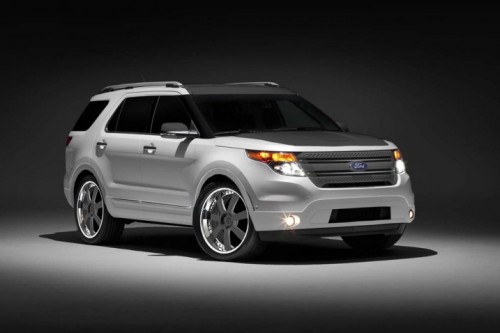
Recently, Ford took the covers off of the all-new 2011 Explorer, and already the Blue Oval is eager to show of this model’s versatility. At this year’s SEMA showin Las Vegas, Ford showed several tuned examples of the new Explorer that show what’s possible with his new crossover.
“It’s so new and reinvented, and the styling is standout from the inside out,” said Craig Patterson, Ford Explorer marketing manager. “Explorer is the perfect choice for people to accessorize. Those who want to customize it are starting from a great base that is extremely well received, and that’s where the attraction lies.”
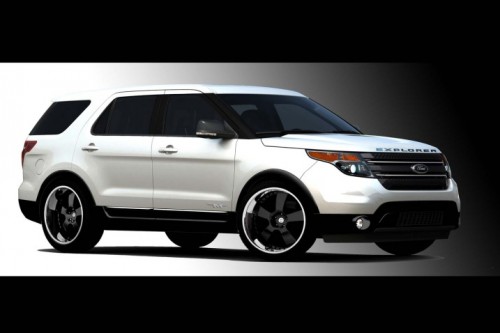
One Explored was tuned by Funkmaster Flex and his Team Baurtwell crew. Their goal was to outfit the Explorer for for urban terrain, and it includes three-piece forged billet wheels complete with 24-inch Cooper tires, and Baer brakes. The design also includes a powerful Sony Xplod audio system inside.
Galpin Auto Sports wanted to create an ultra-luxurious ride; a vehicle that even James Bond would enjoy. That’s why the Galpin team added 24-inch wheels, custom silver paint on the exterior and modified exterior light treatments to convey the posh image. Inside, there’s an abundance of leather and suede, and there’s even an iPad pops up from the second-row console.
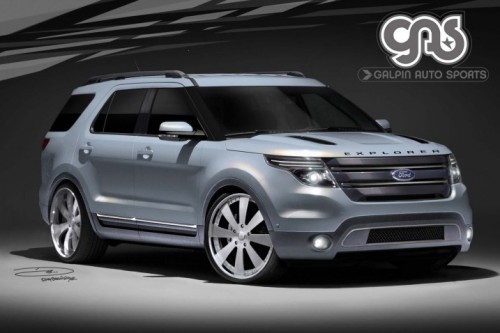
Last but not least, CGS Performance Products wanted to create a luxurious vehicle that’s suited to customers with active lifestyles. Their take on the Explorer included monochromatic silver paint, 22-inch silver wheels, a CGS cat-back exhaust system, and is equipped with two carbon fiber mountain bikes on the roof rack. The interior is outfitted with built-in video screens in the headrests and custom leather.
All of these projects are intended to show that the 2011 Explorer’s style and technology makes it the ideal vehicle for a wide range of consumers.
“We designed three different images for the Explorers at SEMA,” said Melvin Betancourt, Ford specialty design manager. “The new Explorer resonates as a modern SUV, so the modifications play off all the great technology and features that the vehicle is equipped with.”
Ford Fiesta Hatches A Sales Surprise
by FORD IN THE NEWS on NOVEMBER 3, 2010
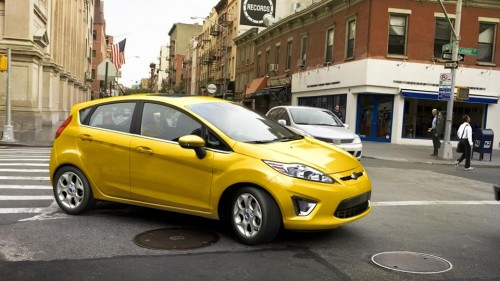
It’s no surprise that demand for the all-new Ford Fiesta is running high, but what may surprise some folks is just which Fiesta model people are demanding. Although the automotive website Wardsauto.com says the “take rate” for 2009 hatchbacks was only 8.3 percent, the noted industry resource also reports more than 60 percent of early Fiesta sales have been of the five-door hatchback.
That important news is proof positive that Ford got it right when the company decided to offer both sedan and hatch bodystyles of its fresh new Fiesta in the U.S., and it’s a strong indicator of future success for the completely redesigned 2012 Ford Focus, which will follow the same strategy when it goes on sale in this country early next year. Significantly, Ford will then become the only full-line automaker in America to offer its B- and C-segment small cars in sedan and hatchback configurations.
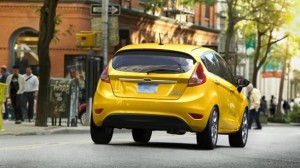
“American car buyers have grown accustomed to the convenience of hatch bodystyles after years of owning SUVs and crossovers,” said George Pipas, Ford sales analyst. “Combined with a generation of younger drivers who have been exposed via the Internet to popular high-performance hatchback offerings in Europe and Asia, we may be seeing the beginning of a shift in buyer acceptance of hatchbacks.”
One thing’s for sure, Ford is definitely seeing a shift in buyers’ perception of small cars thanks to the Fiesta. Instead of the old-school belief that small cars had to be small on amenities, too, today’s Fiesta buyers view their rides as extensions of themselves—and well worth pampering. Just consider the following fast Fiesta facts, based on early sales results:
- Of those who buy Fiesta models offering leather seating surfaces, more than 50 percent opt for the upgrade, and nearly half of all Fiestas are purchased with heated seats.
- Some 80 percent of all Fiestas are bought with the innovative Ford SYNC in-car connectivity system.
- Over 50 percent of Fiesta customers order models with SIRIUS Satellite Radio and almost 80 percent of Fiestas are sold with up-level six-speaker audio systems.
- Keyless entry with push-button start is part of the equipment package on 80 percent of the Fiestas that offer this functionality.
Finally, Ford reports that customers’ favorite Fiesta colors are, in order, Lime Squeeze, Blue Flame Metallic, Monterey Gray, Red Candy and Black. The Fiesta’s competition? You can color them green with envy.
Ford Offers A Complete Rally Kit For The Fiesta
by FORD IN THE NEWS on NOVEMBER 2, 2010
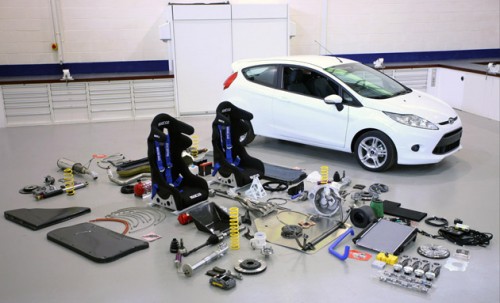
After watching the X Games, it’s obvious that the new Ford Fiesta can easily be transformed into a rally-ready beast. That’s why Ford is giving enthusiasts the chance to create their own weekend rally racer.
Ford Racing has just announced the availability of the R2 rally tuning kit, which brings rally-spec mods to the Fiesta. The kit adds Reiger adjustable dampers, Eibach springs, ventilated disc brakes with four-piston calipers, and a steel roll cage. The kit also helps the Fiesta squeeze out a little more horsepower thanks to a bevy of new parts including pistons, camshafts, injectors, air filter, and more. Overall, the Fiesta R2 produces 168 horsepower and 134 pound-feet of torque.
“The spirit of One Ford is making it possible for us to bring the best of European rally racing to competitors in the U.S.,” said Jamie Allison, director, Ford North America Motorsport. “The Fiesta R2 has already proven itself in Europe as a great platform for aspiring rally drivers.”
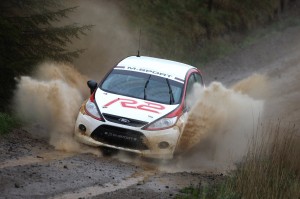
The kit was developed by M-Sport, which has been Ford’s WRC partner since 1997. Ford Racing will also offer a Stage 1 kit that includes performance upgrades, dampers, a limited-slip differential, and a roll cage for those who don’t want the full hardcore experience.
With these rally-spec mods, Fiesta owners will be eligible to compete in the new new Fiesta Sport Trophy Championship division of RallyCar’s Rally America National Championship 2WD class.